In July 2025, the Tea app—a women's dating safety platform—suffered one of the most devastating data breaches in dating app history. 72,000 images leaked. Over a million private messages exposed. Driver's licenses posted publicly on 4chan.
The irony was brutal: an app built to protect women's safety became the very thing that exposed them to danger.
But here's the thing that should terrify you: this wasn't a sophisticated hack. The database was just... sitting there. Exposed. Accessible to anyone who knew where to look.
And if you're using any dating-related app that stores your data on their servers, you could be next.
The Tea App Disaster: What Actually Happened
Let me walk you through the nightmare.
The First Breach (July 25, 2025)
Someone on 4chan discovered that Tea's database—hosted on Google's Firebase platform—was wide open. No authentication required. They found:
- 72,000 images total
- 13,000 verification photos (selfies women submitted to prove they were real)
- Government-issued IDs (driver's licenses, passports)
- Full names, addresses, dates of birth
Within hours, these photos were spread across 4chan, Reddit, and other forums. Driver's licenses were posted publicly. Real women's identities, exposed.
The Second Breach (Days Later)
As if that wasn't bad enough, researchers discovered another vulnerability that exposed even more sensitive data:
- Over 1 million private messages dating back to early 2023
- Discussions about abortions, infidelity, STIs
- Phone numbers and meeting locations
- Real names attached to supposedly "anonymous" reviews
The metadata from leaked photos was used to create a map of Tea subscribers' physical locations. Women who thought they were safely warning others about dangerous men were now being hunted online.
The Aftermath
By August 7, 2025, ten class action lawsuits had been filed against Tea Dating Advice Inc.
But lawsuits don't un-leak your driver's license. They don't erase your private messages from 4chan archives. They don't make you feel safe again.
The damage was permanent. The betrayal was complete. An app that promised safety destroyed it instead.
Why "Privacy-Focused" Isn't Enough
Here's what Tea got wrong—and what every cloud-based dating app gets wrong:
If your data is stored on their servers, it's not really private.
It doesn't matter how good their encryption is. It doesn't matter how many privacy promises they make. It doesn't matter if they have a zero-knowledge architecture or end-to-end encryption or any other buzzword.
If your intimate, personal information is sitting on someone else's server, it can be leaked.
The Problem with Cloud-Based Dating Apps
Most dating-related apps work like this:
- You create an account (email, phone number, maybe Facebook login)
- You enter sensitive information (names, photos, messages, ratings)
- Everything gets uploaded to their cloud servers
- They store it "securely" (they promise)
- You hope nothing bad happens
This architecture has fundamental problems:
- Single point of failure – Breach the server, get everyone's data
- Insider access – Employees can see your information
- Legal demands – Governments can subpoena records
- Acquisition risk – Company gets bought, new owners have different values
- Configuration errors – Like Tea, one mistake exposes everything
- You have to trust them – And trust is a terrible security model
Even apps with "good" security still have your data sitting on their servers. That data is worth money—to hackers, to data brokers, to anyone who wants it.
What Real Privacy Looks Like: Local-First Architecture
There's only one way to guarantee your data can't be leaked from a company's servers:
Don't put it on their servers in the first place.
This is called "local-first" architecture, and it's how Friend Aura was built from day one.
How Friend Aura's Privacy Model Works
1. Your data never leaves your device
Everything you enter—names, scores, emojis, notes—is stored locally on your iPhone or iPad. Not on our servers. Not on Google's servers. Not on anyone's servers.
It lives in your device's secure storage, protected by iOS's built-in encryption. The same system that keeps your photos, messages, and banking apps secure.
2. No account required
You know what can't be hacked? An account that doesn't exist.
Friend Aura doesn't require an email, phone number, or login. You download it. You use it. That's it.
No username database to breach. No password hash table to crack. No email list to leak.
3. Optional iCloud sync (through YOUR Apple account)
Want to sync between your iPhone and iPad? Friend Aura uses your personal iCloud account—not our servers.
Your data flows directly from your iPhone to your iCloud to your iPad. We never see it. We never touch it. We couldn't access it even if we wanted to.
And if you don't want iCloud sync? Turn it off. Everything stays 100% local.
4. We can't leak what we don't have
This is the most important part: we have no idea what you're tracking.
We don't know your name. We don't know who you've dated. We don't know your scores or notes or anything else.
If someone hacked our "servers" (we don't really have any), they'd find... nothing. Because there's nothing to find.
The best data to leak is data that doesn't exist on servers in the first place.
But Wait, There's More: Actual Device Security
Local storage is great, but what if someone gets your phone?
Friend Aura has multiple layers of protection:
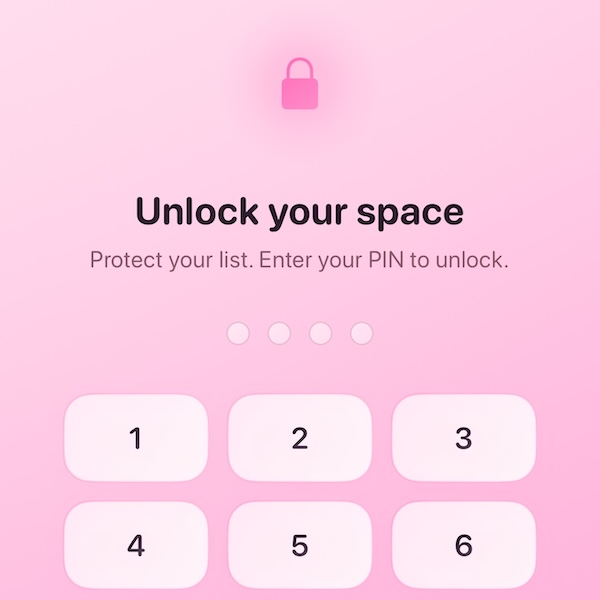
1. App Lock with Face ID / Touch ID / PIN
The app locks automatically when you close it. To get back in, you need:
- Face ID – Your face is the password
- Touch ID – Your fingerprint unlocks it
- PIN – A secure numeric code
No one can casually open Friend Aura and snoop through your entries. Not your friends. Not your roommate. Not a date who grabbed your phone.
2. Configurable Lock Timeout
Choose how quickly the app locks:
- Immediately (locks the instant you close it)
- 30 seconds
- 1 minute
- 5 minutes
Paranoid? Go immediate. More relaxed? Give yourself some breathing room.
3. iOS Security Foundation
Friend Aura leverages Apple's industry-leading security infrastructure:
- Hardware-level encryption (Secure Enclave)
- App sandboxing (apps can't access each other's data)
- Biometric authentication (Face ID/Touch ID)
- Encrypted backups (if you use iCloud)
We're not reinventing security. We're using the best tools available and designing around them correctly.
What About Other "Private" Dating Apps?
You might be thinking: "Okay, but Tea was poorly secured. Other apps are better, right?"
Maybe. But here's the problem:
You have no way to verify their security claims.
When an app says "we encrypt your data" or "we take privacy seriously," you're taking their word for it. You can't audit their servers. You can't inspect their database configuration. You're trusting them—and hope they don't make a Tea-sized mistake.
Even well-intentioned companies screw up:
- Ashley Madison (2015) – 32 million users exposed, including sexual preferences and real names
- Adult Friend Finder (2016) – 412 million accounts leaked
- Grindr (2020) – Location data sold to third parties
- MeetMindful (2021) – Database containing 2.28 million records exposed
- Tea (2025) – Government IDs and private messages leaked
Notice a pattern? If it's on a server, it can leak.
The only guaranteed solution is to not put your data on servers in the first place.
The Questions You Should Ask Every Dating-Related App
Before you trust an app with sensitive information about your dating life, ask:
- Where is my data stored?
- ❌ "Our secure servers" (still a risk)
- ✅ "On your device only" (safest option)
- Do I need to create an account?
- ❌ Yes, with email/phone (creates attack vector)
- ✅ No account needed (nothing to hack)
- Can the company see my data?
- ❌ "We encrypt it, but technically yes" (trust-based)
- ✅ "We never see it, it's local-only" (architecture-based)
- What happens if their database is breached?
- ❌ My data could be exposed (huge risk)
- ✅ Nothing, my data isn't there (zero risk)
- Can I use it without internet?
- ❌ No, requires server connection (cloud-dependent)
- ✅ Yes, fully offline capable (truly local)
If an app can't give you the right answers to these questions, don't trust it with sensitive information.
Why This Matters More Than Ever
The Tea disaster isn't an outlier. It's a warning.
As dating culture evolves, more people want private ways to track experiences, remember connections, and reflect on patterns. That's natural. That's healthy.
But the tools to do this safely barely exist. Most apps either:
- Store everything on servers (creating leak risk)
- Require accounts (creating identity exposure)
- Track your behavior (selling data to advertisers)
- Or all three at once
Friend Aura was built specifically to solve this problem. Not as an afterthought. Not as a "privacy feature." But as the entire foundation of the architecture.
Privacy isn't a feature you add. It's a commitment you build from the ground up.
What True Privacy Gives You
When your data truly stays private—when it's local-only, when no one can access it, when you control everything—you get something priceless:
Freedom.
- Freedom to track what matters to you without judgment
- Freedom to be honest in your notes
- Freedom to reflect on patterns and experiences
- Freedom from worrying about leaks, breaches, or exposure
- Freedom to explore and understand yourself
You shouldn't have to choose between having a useful tool and protecting your privacy. You deserve both.
The Bottom Line
After the Tea app disaster, the lesson should be crystal clear:
If your sensitive data is on someone's cloud server, you are one configuration error away from catastrophe.
A truly private dating app—or connection tracker, or personal journal—doesn't store your data on their servers. It doesn't require an account. It doesn't give you privacy promises; it gives you privacy architecture.
That's what Friend Aura is. Not because we're nice people who care about privacy (though we are and we do). But because we designed it so we couldn't violate your privacy even if we wanted to.
Your data lives on your device. Locked with Face ID. Synced through your own iCloud if you want. But never, ever sitting on a server waiting to be leaked.
Because the best way to protect your data isn't to promise we'll keep it safe.
It's to never have access to it in the first place.
Ready for Real Privacy?
Friend Aura launches tomorrow (November 28). Your data stays on your device. No accounts. No servers. No leaks. Ever.
Download on App Store